Overview
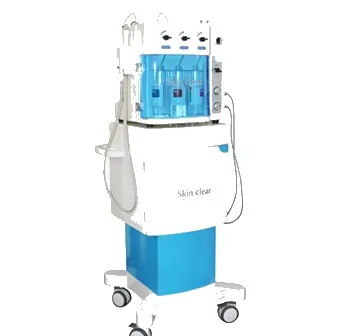
The Pmise OJ-01 is a water and oxygen jet facial machine, and the name is literal. Pressurised gas picks up saline or a water-based serum, tears it into a fine spray, and drives it at the skin through a handheld nozzle. No crystals. No abrasive tip. The working edge is moving liquid. That fact explains most of what follows.
Buyers split two ways. Clinics with a laser or IPL platform want something for the weeks between energy sessions. Salons want a device treatment priced above a manual facial. Both get the same kit: a hydrodermabrasion handpiece behind a pressure gauge, three spray patterns, five cannulas and a 300 ml reservoir. Our clinic solutions by skin concern show where it sits.
What earns its place? Rebooking. A deep cleansing facial with no crust and no flaking sells twice. Price it as comfort and skin prep and it pays. Sell it as resurfacing and you'll be handling complaints. This page is educational material for equipment buyers, not medical advice.
How it works
Follow the fluid. Serum sits in a sealed bottle, gas pressure pushes it down the feed line, and at the nozzle it meets a fast gas jet and shatters. Our engineering archive puts that droplet stream around 50 to 80 micrometres. Small droplets, high speed, almost no individual mass. It reads as cool rain, not sandblasting.
Exfoliation here is mechanical. Each droplet shears loose corneocytes and the oily plug in a follicle mouth, flushing pore openings while the skin stays wet. Nothing is ablated or coagulated. Depth comes from the operator's hand rather than a dial, and that matters more than the sticker price.
- Pressure runs 1 to 5 bar. Our device manuals are blunt: start low, climb in steps, read the face and not the gauge.
- Standoff distance is the real intensity control, 0.3 to 0.5 cm for a peeling pass, 0.5 to 1.0 cm with three to five gentle sweeps for rejuvenation.
- Hold it like a pencil at 45 to 90 degrees, working diagonally so passes weave instead of striping.
The gas is only a carrier, drawn from the onboard compressor or an external medical oxygen cylinder. Treat claims about oxygen feeding living dermis with suspicion. What you can defend: clean skin, softer texture, real hydration, serum applied under pressure. Eye protection goes on before the pedal goes down.
Applications
- Skin prep before an energy course. Clearing oil and dead scale gives light a cleaner path into the skin, so run it days ahead of a session on the Pmise MF-05 multifunction e-light.
- Congested, oily skin. The stream flushes follicle openings, and our manuals note loosened blackheads are blown clear of the surface during the pass.
- Dull, dehydrated skin before an event. Your classic no-downtime treatment: softer texture, hydrated finish, makeup back on the same afternoon.
- Maintenance between laser courses. Keeps a client engaged instead of drifting, and pairs with our skin rejuvenation solutions page.
- Pneumatic serum delivery. Pushing a water-soluble active onto freshly exfoliated skin is the mechanism studied in hydradermabrasion research, where a spaced course beat hand application.
Key advantages
- Low downtime that holds up. Our manuals list mild, transient redness as the expected reaction. Pinpoint bleeding over inflamed acne means back the pressure off.
- Predictable running cost. Water, serum, power, gas. No crystal media to restock, no single-use cartridge gating the handpiece.
- Two gas sources. Onboard compressor for routine work, external medical oxygen cylinder when a protocol calls for it.
- Short learning curve, bounded risk. No chromophore targeting, no thermal injury pathway, no light hazard.
- Hygiene you can audit. Purge residual fluid, flush the handpiece with distilled water, keep the outlet clear. A blocked outlet is the commonest fault and it's preventable.
Frequently asked questions
Which skin types can this treat, and who shouldn't have it?
Nothing here targets pigment with light, so the jet carries no Fitzpatrick-related burn risk and darker skin isn't excluded. Judgement still belongs to a clinician. Skip infected lesions, broken skin and reactive rosacea. The American Academy of Dermatology advises disclosing cold sore breakouts, skin that scars easily and isotretinoin use before abrasive facial work.
How many sessions should I plan, and how often?
Sell a course, not a miracle. In the published hydradermabrasion study, volunteers had six treatments spaced seven to ten days apart, and improvement built across that period rather than after one visit. Weekly to fortnightly suits congested or dull skin, tapering to monthly maintenance.
What does it cost to run per treatment?
Very little, which is the point. One session draws on the 300 ml reservoir and a small pour from the 30 ml serum cup, plus power and any oxygen you use. Cannulas get cleaned between clients, not binned, so there's no cartridge fee. Your real variable cost is the serum.
How much training does a therapist need, and what about service?
Most of the skill sits in the hand, not the panel. Distance, angle, speed and knowing when to stop separate a good pass from an over-treated cheek, learned under supervision. Ask any supplier for the warranty term, spare handpiece availability and lead time on parts before you sign.
What can this machine not do?
Plenty, and say so at consultation. It won't resurface. Deep wrinkles, ice-pick scars, dermal pigment and vascular lesions sit outside its reach, because none of them respond to surface shear and hydration. Any suspicious or persistent lesion needs a qualified clinician, never a facial protocol.
Evidence & further reading
Educational material for equipment selection and operator training. It is not medical advice, a treatment protocol or a promise of clinical outcome.