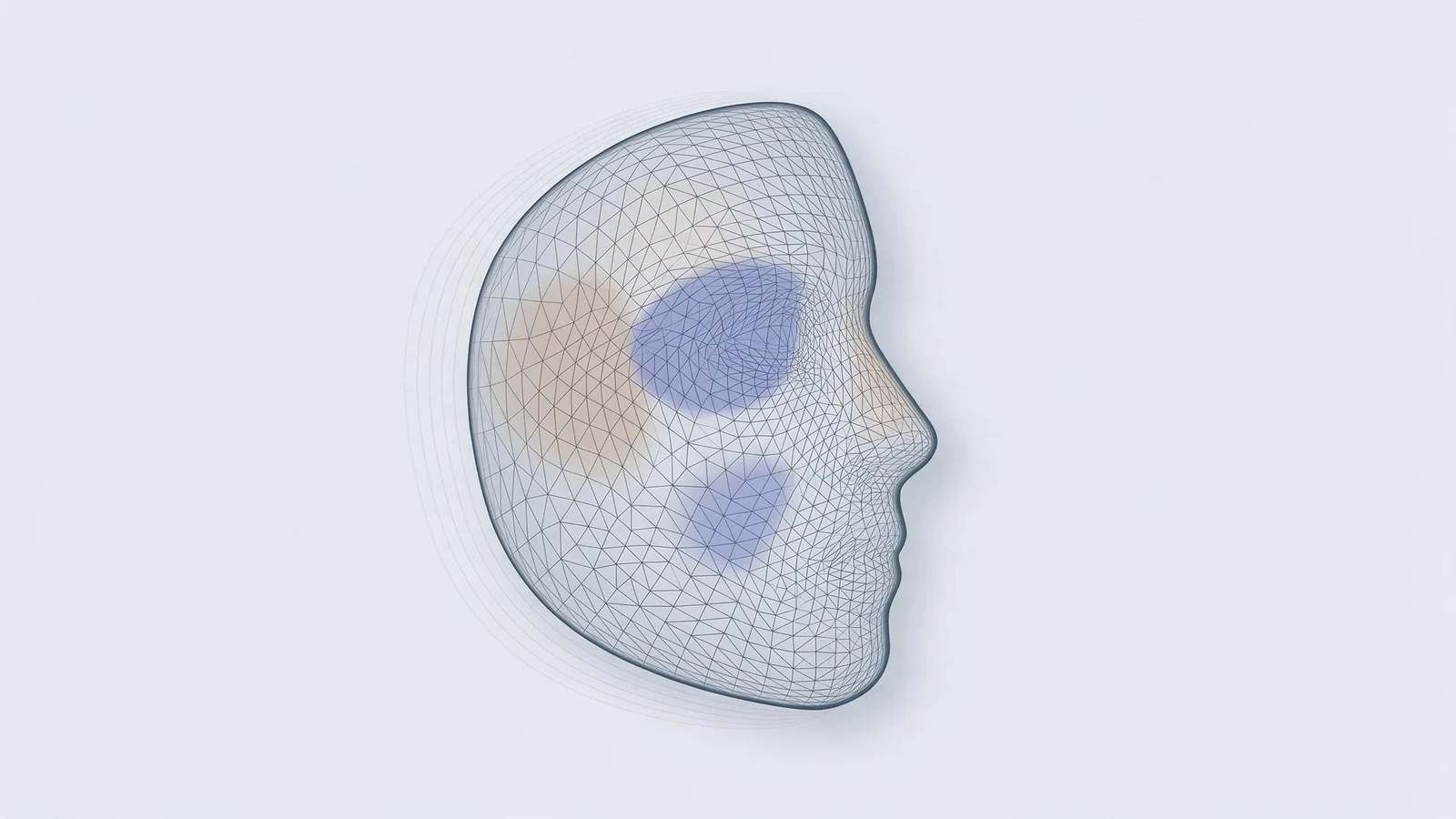
What Facial IPL Actually Treats
IPL works through selective photothermolysis, meaning filtered light bands target skin chromophores—haemoglobin in vessels, melanin in spots. Surrounding tissue stays cool enough to recover quickly, so your clinic can treat diffuse redness, superficial telangiectasia, solar lentigines, and some inflammatory acne with the same platform, often in one session.
Facial telangiectasia responds well. A retrospective study of 416 patients found pulsed dye laser at 595 nm (9-12 J/cm2) and a 500-670 nm plus 870-1200 nm IPL handpiece at 30-46 J/cm2 cleared vessels significantly better than IPL systems using 560-1200 nm or 590-1200 nm at 15-24 J/cm2. That's a real spread in fluence and wavelength. If your device only offers a narrow band or low maximum output, you'll leave vessel clearance on the table, so look for a handpiece covering 500-670 nm and delivering at least 30 J/cm2.
Rosacea-related telangiectasia is another solid indication. One prospective randomized controlled trial used 540 nm IPL after anti-mite therapy and followed patients for two years; the treated group had improved telangiectasia and a reduced recurrence rate of rosacea. That's a long-term outcome, not a one-off flash, making a 540 nm filter a practical requirement for clinics that see rosacea patients.
Solar lentigines, the flat brown spots from sun exposure, are within IPL's reach, but here the evidence adds a caveat. A split-face comparison in Asian patients found that both IPL and long-pulse pulsed dye laser improved overall skin rejuvenation, yet the laser was significantly better at clearing lentigines. If your clinic's main demand is stubborn pigmented spots, a Q-switched 1064 nm system may be a more honest tool. Link to pigment removal protocols and device matching for a deeper comparison.
Mild to moderate inflammatory acne can respond to IPL through photothermal effects on sebaceous glands and anti-inflammatory action on active papules, but it isn't a first-line acne treatment, and you shouldn't market it as one. As part of a broader facial rejuvenation package, it helps. A real-world study of 236 patients who had at least six IPL sessions reported significant improvements in erythema, pigmentation, and wrinkle indices. Six sessions—that's the commitment level your staff should quote.
What Facial IPL Does Not Do
Textural change is out; IPL won't touch it. Deep rhytids, acne scars, and dermal atrophy need collagen remodelling from fractional CO2 or radiofrequency microneedling, and IPL is non-ablative, so it doesn't create controlled wounds in the dermis. It's not for scars. If a patient asks about pitted scars, the answer is a fractional laser, not a filter.
Dermal or mixed pigment won't clear with IPL. Nevus of Ota is the classic example, and our engineering archive notes that about 50% of nevus of Ota cases are acquired and occur during adolescence, while the other 50% are congenital and more frequent in females. The lesion sits in the dermis, with melanocytes holding dense melanin. Q-switched Nd:YAG at 1064 nm is the first choice because the shorter pulse shatters dermal pigment. IPL pulses are too long and too superficial. You'll refer or switch to a 1064 nm Q-switched platform if you see a blue-grey patch on the face.
Melasma is another no-go. IPL can worsen melasma through post-inflammatory hyperpigmentation, especially in skin types III and above, so your clinic shouldn't promise melasma clearance with IPL. Alternative approaches include low-fluence Q-switched 1064 nm or topical therapy under dermatologist guidance.
Scarring of any type is beyond IPL's mechanism; it doesn't ablate, and it doesn't stimulate enough collagen to remodel fibrotic tissue. Fractional CO2 or radiofrequency devices are the right tools, and our catalog includes a CO2 fractional system and an RF platform with mono-polar and bi-polar heads. Those are the workhorses for scar revision.
Facial-Specific Practicalities
Eye protection isn't optional. The orbital rim is the boundary, and you never treat inside it. Metal corneal shields or opaque goggles go on the patient before you charge the handpiece, because IPL light can damage the retina even through closed eyelids. Your protocol should require double-checking shield placement before every pulse, and never angle the handpiece toward the eye.
Treating over the nose and lip demands lower fluence and shorter pulse durations. The skin is thin here, and the underlying cartilage and bone don't dissipate heat well. Start with a test spot on the jawline. Wait a few minutes, then move to the nose. For the upper lip, avoid overlapping pulses; the philtrum can blister easily. A common protocol reduces fluence by 2-3 J/cm2 on these areas compared to the cheeks.
Higher phototypes need real caution. One case report documents second-degree burns in a Fitzpatrick type IV patient after IPL. The official FDA classification for IPL applicators notes the target area is the malar region from tragus to tragus including the nose, but it doesn't override skin type risk. Generally, IPL isn't recommended for skin types higher than III because of burn risk. For types IV-VI, a long-pulsed 1064 nm Nd:YAG is safer for vascular and hair removal work—that's a hard rule. If your clinic serves a darker-skinned population, you'll need a 1064 nm platform in the room.
How many sessions? For facial redness and pigmentation, a realistic course is four to six sessions spaced three to four weeks apart. The real-world study mentioned above required six or more sessions for significant improvements across erythema, pigmentation, and wrinkle indices. Maintenance sessions every three to six months keep results stable. Don't sell a single-session miracle.
Device Selection for Facial IPL
IPL machines aren't all equal for the face. You need a handpiece with exchangeable filters, not a fixed narrow band, because the key wavelength bands for facial work are 540 nm for rosacea and vascular lesions, 560 nm or 590 nm for pigmentation and skin type II-III, and a dual-band option like 500-670 nm plus 870-1200 nm for deeper vessels at higher fluence. Our MF-05 E-Light system combines IPL with bipolar RF. That allows lower optical fluence while maintaining tissue heating. It's useful for skin types III and borderline IV, where pure IPL risks burns, and the RF component also tightens skin mildly, but it's not a substitute for fractional laser.
Cooling matters on the face. A sapphire contact cooling tip or a chilled gel layer protects the epidermis. Look for a machine with adjustable cooling temperature. Our RF device has a cooling range of -2°C to 0°C, which is a benchmark. If the IPL handpiece lacks active cooling, you'll see more downtime and more unhappy patients.
Size and service also matter. A clinic running back-to-back facial sessions on a Saturday needs a machine that doesn't overheat. Check the duty cycle and the cooling system. Our Beijing factory holds FDA, CE, RoHS and SGS certification, and we provide training and maintenance. That's the baseline for any supplier you consider.
A Diagnosis-First Rule for Pigmented Lesions
Rule out malignancy before any IPL pulse on a pigmented spot. Atypical lesions show asymmetry, irregular borders, multiple colours, diameter over 6 mm, or any changing lesion, so refer them to a dermatologist. IPL can mask melanoma. It does this by partially bleaching the lesion while the deeper component grows. No aesthetic machine should touch an undiagnosed pigmented lesion. That's a medical line, not a business preference. Write it into your consent form and your staff training manual.FAQ
Can IPL be used on all skin types?
No, it isn't. IPL generally isn't recommended for Fitzpatrick skin types higher than III because of the increased risk of burns and post-inflammatory hyperpigmentation. For types IV-VI, you'll find long-pulsed 1064 nm Nd:YAG is safer. A systematic review found lower PIH rates with IPL in types IV-VI compared to diode and fractional erbium lasers, but the absolute risk remains significant. Test spots and conservative settings are mandatory.
How many IPL sessions are needed for facial redness?
Four to six sessions, spaced three to four weeks apart. A real-world study of 236 patients who had six or more sessions reported significant improvements in erythema, pigmentation, and wrinkle indices. Maintenance every three to six months extends results. Single sessions rarely produce durable clearance of telangiectasia.
Does IPL help acne scars?
No, it doesn't. IPL doesn't remodel scar tissue. For atrophic or hypertrophic scars, fractional CO2 or radiofrequency microneedling are the appropriate tools. IPL may reduce active inflammatory acne lesions, but it won't fill pitted scars. Choose the device based on the scar type, not on the patient's hope.
Is IPL safe around the eyes?
IPL is never applied inside the orbital rim. Metal corneal shields are mandatory. The FDA classification for IPL applicators specifies the target area as the malar region from tragus to tragus including the nose, explicitly excluding the periocular area. Eye injury from IPL can be severe and permanent. Your protocol must include double-checking shield placement and never angling the handpiece toward the eye.
This page is educational material for equipment buyers, not medical advice. Diagnosis and treatment decisions require a licensed practitioner.
Evidence & further reading
Educational material for equipment selection and operator training. It is not medical advice, a treatment protocol or a promise of clinical outcome.
- A Retrospective Study on Efficacy of Pulsed Dye Laser and Intense Pulsed Light for the Treatment of Facial Telangiectasia - PubMed
- Improved telangiectasia and reduced recurrence rate of rosacea after treatment with 540 nm-wavelength intense pulsed light: A prospective randomized controlled trial with a 2-year follow-up - PubMed
- Comparison study of intense pulsed light versus a long-pulse pulsed dye laser in the treatment of facial skin rejuvenation - PubMed
- Comprehensive Facial Skin Rejuvenation With Long-Term Regular Intense Pulsed Light Therapy: A Real-World Study - PubMed
- Second-Degree Burns Following Intense Pulsed Light Therapy in a Patient With Fitzpatrick Skin Type IV: A Case Report
- Product Classification